Best Electric Cars 2026 USA: Top EV Models, Features, and Buying Guide
However, the best electric car is not the same for every buyer. A daily commuter may want low charging costs and easy parking. A family may need cargo room, safety technology, and rear-seat comfort. A road trip driver may focus on range, charging speed, and highway comfort. A tech-focused buyer may compare software, driver-assistance features, infotainment, and smart connectivity.
This guide explains the Best Electric Cars 2026 USA in a practical and beginner-friendly way. It focuses on what buyers should compare before choosing an EV, including range, charging, cost, technology, comfort, safety, ownership needs, and long-term value.
Quick Answer: What Are the Best Electric Cars 2026 USA?
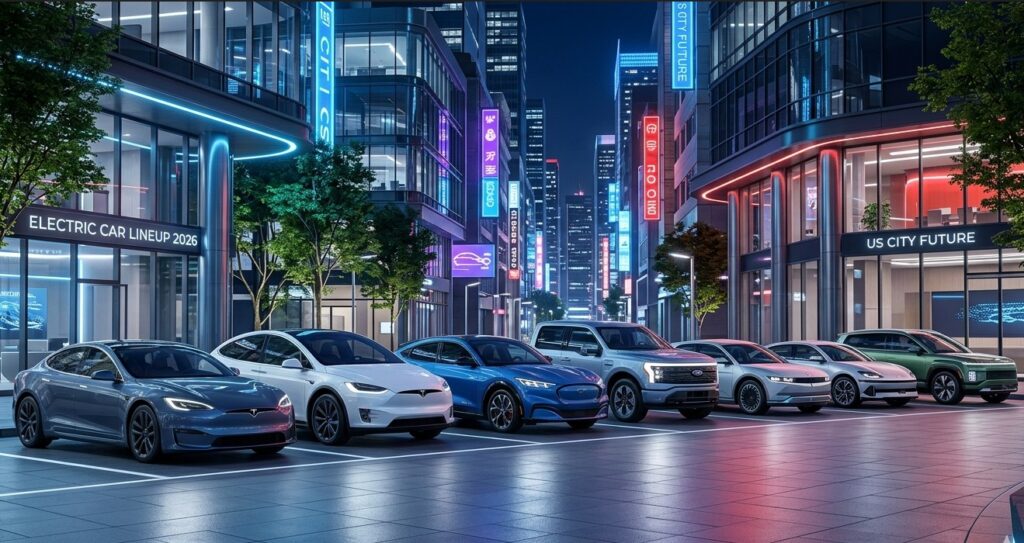
The Best Electric Cars 2026 USA include a mix of affordable electric SUVs, practical crossovers, premium EVs, family-friendly electric vehicles, and performance-focused models. Popular EV categories include compact electric SUVs like the Chevrolet Equinox EV, stylish crossovers like the Hyundai Ioniq 5, sporty options like the Ford Mustang Mach-E, premium electric SUVs from luxury brands, and practical Tesla alternatives from several automakers.
For most US buyers, the best EV is the one that fits daily driving, charging access, budget, space, and comfort needs. A buyer with home charging may enjoy an EV more than someone who depends only on public charging. A commuter may not need the longest range, while a road trip driver should compare charging speed and highway efficiency. Before buying, shoppers should review total cost, battery warranty, insurance, cargo space, charging options, tax credit eligibility, and real-world driving habits.
Why Electric Cars Matter in 2026
Electric cars matter in 2026 because more US buyers are looking for lower fuel costs, modern technology, quieter driving, and reduced dependence on gasoline. EVs are also becoming more diverse. Shoppers can now compare smaller electric crossovers, larger family SUVs, premium models, sporty EVs, and practical daily drivers.
At the same time, buyers are becoming more careful. They want to know whether an EV fits their real life. Range, charging access, insurance, battery warranty, road trip needs, and local electricity rates all matter. A vehicle that looks great on paper may not be the best choice if charging is inconvenient.
The EV market also connects with broader technology trends. Electric cars now include advanced software, connected apps, driver-assistance features, digital dashboards, smart route planning, and over-the-air updates. This makes an EV feel more like a technology product as well as a vehicle.
| Buyer Type | Best EV Priority | What to Compare |
|---|---|---|
| Daily commuter | Efficiency and charging ease | Home charging, range, comfort |
| Family buyer | Space and safety | Cargo room, seats, safety tech |
| Road trip driver | Range and charging network | Fast charging and route planning |
| Tech buyer | Software and smart features | Apps, displays, updates, driver assistance |
| Budget buyer | Total cost | Price, incentives, insurance, charging cost |
1. Best EV Categories for US Buyers
The Best Electric Cars 2026 USA should be viewed by category, not only by brand. This helps buyers choose based on real needs instead of popularity.
Compact electric SUVs are a strong choice for many drivers because they offer higher seating, useful cargo space, and easier daily practicality than smaller cars. Midsize electric crossovers may work better for families that need more room. Luxury EVs appeal to buyers who want premium interiors, advanced technology, and stronger performance.
Performance EVs are also popular because electric motors can deliver quick acceleration. However, performance should not be the only factor. Buyers should also think about tire costs, insurance, comfort, and daily efficiency.
For practical shoppers, affordable electric SUVs may offer the best balance. They often provide good daily range, modern safety features, and enough space for commuting, errands, and weekend trips.
2. Affordable Electric Cars and SUVs
Affordable EVs are important because price remains one of the biggest barriers for many buyers. In 2026, more shoppers are comparing electric vehicles with traditional gas models and hybrids to see whether the total cost makes sense.
Affordable electric SUVs such as the Chevrolet Equinox EV show why this category is growing. Buyers want an EV that feels practical, not experimental. They want usable range, comfortable seating, cargo flexibility, and familiar features without moving into luxury pricing.
However, affordability is not only about the starting price. Buyers should compare lease offers, financing rates, tax credit eligibility, insurance costs, charging setup, and long-term maintenance. A lower purchase price may not always mean the lowest ownership cost.
| Affordable EV Factor | Why It Matters | Buyer Tip |
|---|---|---|
| Starting price | Controls monthly payment | Compare trims carefully |
| Charging setup | Affects daily convenience | Check home charging cost |
| Insurance | Can vary by model | Get quotes before buying |
| Incentives | May reduce total cost | Check current eligibility |
| Warranty | Protects long-term ownership | Review battery coverage |
3. Best Electric Cars for Families
Family EV buyers should focus on space, comfort, safety, and charging convenience. A family vehicle needs more than attractive styling. It should handle school runs, grocery trips, weekend travel, child seats, sports gear, and daily errands.
Electric SUVs and crossovers are often the best fit for families because they provide flexible cargo space and easier passenger access. Larger electric SUVs may offer three-row seating, while compact and midsize EVs may be enough for smaller households.
Families should test rear-seat comfort, cargo space behind the seats, child seat access, visibility, cabin storage, and charging port placement. These small details matter in daily life.
Safety technology is also important. Driver-assistance features can support awareness, but they do not replace careful driving. Buyers should understand how the systems work before relying on them.
4. Best EVs for Commuters
For commuters, the best electric car is usually one that is efficient, comfortable, easy to charge, and simple to park. A daily commute does not always require the longest available range. Many drivers need enough range for normal use plus a comfortable buffer.
Commuters with home charging may find EV ownership especially convenient. Charging overnight can be simpler than visiting a gas station. However, apartment dwellers or drivers without a regular charging location should study public charging options before buying.
Important commuter features include seat comfort, quiet cabin quality, phone connectivity, driver-assistance systems, climate control, and predictable range. A comfortable EV can make daily driving feel easier and less stressful.
5. Luxury and Performance Electric Cars
Luxury and performance EVs are a major part of the 2026 market. These models often offer premium interiors, fast acceleration, advanced screens, strong audio systems, and high-end driver-assistance features.
Sporty EVs such as the Ford Mustang Mach-E show how electric power can support both daily driving and a more exciting driving feel. Premium electric SUVs and sedans from luxury brands serve buyers who want comfort, design, technology, and performance in one package.
Still, luxury EV shoppers should think carefully about total cost. Larger wheels, performance tires, premium insurance, repairs, and advanced technology packages can increase ownership expenses. A test drive is important because ride comfort, visibility, controls, and cabin layout vary widely.
Performance can be fun, but daily usability matters more for most drivers. A buyer should choose a luxury EV that feels comfortable on regular roads, not only impressive in acceleration numbers.
6. Charging, Range, and Daily Use
Charging is one of the most important EV buying factors. A buyer with home charging may have a very different experience than a buyer who depends on public stations. Before choosing from the Best Electric Cars 2026 USA, shoppers should understand their charging routine.
Range matters, but real-world use matters more. Weather, highway speed, driving style, passengers, cargo, and climate control can affect range. Buyers should choose an EV with enough buffer for normal driving and occasional unexpected trips.
Fast charging is important for road trips. Some EVs charge faster than others, and charging station access can vary by region. Road trip drivers should check charging networks along their regular routes.
EV charging questions to ask
- Can I charge at home?
- How many miles do I drive on a normal day?
- Are fast chargers available near my routes?
- Will cold weather affect my driving needs?
- How long do I usually keep a vehicle?
7. EV Technology, Safety, and Smart Features
Electric vehicles often include advanced technology. Buyers may compare large touchscreens, mobile apps, route planning, driver-assistance features, voice controls, over-the-air updates, and connected services.
Technology can improve convenience. A good app can help monitor charging, precondition the cabin, find the vehicle, and check battery status. Smart route planning can make longer trips easier by adding charging stops.
However, buyers should test the technology before purchase. Some systems are easier to use than others. A clean interface can improve daily driving, while confusing controls can become frustrating.
Privacy also matters. Connected cars collect data. Buyers should review privacy settings, app permissions, and account security. Strong passwords and multi-factor authentication can help protect connected vehicle accounts.
8. EV Cost and Ownership Considerations
EV ownership cost includes more than the sticker price. Buyers should consider monthly payment, charging cost, home charger installation, insurance, tires, registration, warranty, depreciation, and repair access.
EVs often have fewer traditional maintenance items than gas vehicles. However, tires may wear faster on some models because EVs can be heavier and deliver quick torque. Insurance can also vary depending on repair costs and technology features.
Tax credits and incentives may help some buyers, but eligibility can change. Shoppers should confirm current rules before making a decision. They should also compare lease and purchase options because EV lease deals can sometimes be attractive.
| Ownership Cost | Why It Matters | What to Do |
|---|---|---|
| Charging | Replaces fuel spending | Estimate home and public charging cost |
| Insurance | Affects monthly ownership | Get quotes before purchase |
| Home charger | Improves convenience | Check installation cost |
| Tires | Can wear faster on some EVs | Budget for replacement |
| Warranty | Protects major components | Review battery and powertrain coverage |
Common EV Buying Mistakes to Avoid
One common mistake is buying an EV without a charging plan. Charging access affects daily convenience more than almost any feature. Buyers should solve this question before choosing a model.
Another mistake is focusing only on maximum range. A longer range may be useful, but comfort, price, charging speed, warranty, cargo space, and insurance also matter.
Some buyers also ignore total cost. A low monthly payment may still come with higher insurance, expensive tires, or costly home charging installation. Others choose an EV based on technology without checking whether the interface feels easy to use.
- Do not buy before checking charging access.
- Do not choose only by range numbers.
- Do not ignore insurance quotes.
- Do not skip a real test drive.
- Do not forget battery warranty details.
- Do not assume every EV fits road trips equally.
Practical Expert Insight
The Best Electric Cars 2026 USA are not simply the most expensive or the longest-range models. The best EV is the one that fits the buyer’s daily life. For many drivers, a practical electric crossover with home charging will be more useful than a luxury EV with features they rarely use.
Buyers should think about how they actually drive. A short-distance commuter has different needs than a family that travels every weekend. A road trip driver needs reliable fast charging. A city driver may prefer a smaller EV that is easier to park.
The smartest EV purchase starts with lifestyle, not hype. Choose the vehicle that matches your driving habits, charging access, budget, and comfort needs.
FAQ
What are the Best Electric Cars 2026 USA?
The Best Electric Cars 2026 USA include practical electric SUVs, compact EVs, premium electric crossovers, family-friendly electric vehicles, and performance EVs. Popular choices may include models such as Chevrolet Equinox EV, Hyundai Ioniq 5, Ford Mustang Mach-E, Tesla alternatives, and luxury electric SUVs. The best choice depends on budget, range needs, charging access, passenger space, and daily driving habits.
Is an electric car good for daily commuting?
An electric car can be excellent for daily commuting if charging is convenient. Drivers with home charging can often start each day with enough battery for regular use. EVs are quiet, smooth, and efficient in daily traffic. However, commuters without home or workplace charging should check nearby public charging options before buying.
Should I buy an EV or a hybrid in 2026?
The choice depends on charging access and driving habits. An EV may work well if you can charge regularly and drive predictable routes. A hybrid may be easier if you do not have reliable charging or often take long trips in areas with fewer chargers. A plug-in hybrid can be a middle ground for some buyers.
What should families check before buying an EV?
Families should check rear-seat space, child seat access, cargo room, safety features, charging convenience, road trip range, and cabin comfort. They should also test daily usability, including loading groceries, strollers, sports gear, or luggage. A family EV should feel practical in normal life, not only impressive in a showroom.
How important is EV charging speed?
Charging speed matters most for road trips and drivers who depend on public charging. If you mostly charge at home overnight, fast charging may matter less. However, if you travel often, compare charging speed, route planning, and charging network access before buying. A good charging experience can make EV ownership much easier.
Final Practical Checklist
- Check whether you can charge at home or work.
- Compare real driving needs, not only maximum range.
- Get insurance quotes before choosing an EV.
- Review battery warranty and ownership coverage.
- Test drive the EV on roads similar to your daily route.
- Try the infotainment system and mobile app before buying.
- Estimate charging cost and possible home charger installation.
- Compare cargo space, rear-seat comfort, and visibility.
- Check current tax credit or incentive eligibility.
- Choose the EV that fits your lifestyle, not only the trend.
Conclusion
Best Electric Cars 2026 USA is a broad topic because the EV market now serves many types of drivers. Some buyers want an affordable electric SUV. Others want a family EV, a commuter car, a luxury model, or a performance-focused electric crossover.
The right EV depends on practical details. Charging access, range needs, insurance, comfort, cargo space, technology, warranty, and total cost all matter. A smart buyer should compare these factors before choosing a model.
For US drivers, the best next step is simple. Study your daily driving habits, check charging options, compare a few models, and take a real test drive. The strongest EV choice in 2026 will be the one that feels useful, comfortable, and realistic for your everyday life.