Future AI in 2026: How Artificial Intelligence Will Transform Daily Life, Smart Cities, Jobs, and Business
Artificial intelligence is no longer a futuristic concept that only exists in science fiction movies. Across the United States, Future AI technology is rapidly becoming part of everyday life, from smart homes and digital workplaces to autonomous transportation systems and advanced healthcare tools. Businesses, students, entrepreneurs, and technology enthusiasts are all trying to understand how artificial intelligence will shape the future over the next decade.
In 2026, AI innovation is expected to become even more advanced. Smart cities, AI-powered business automation, robotic assistants, and intelligent transportation systems are already influencing how people work, communicate, shop, travel, and make decisions. The future of artificial intelligence is not just about robots replacing humans. Instead, it is about improving productivity, reducing repetitive work, increasing efficiency, and helping businesses and individuals make smarter decisions faster.
This complete guide explores the future AI technology trends in 2026, how future AI will change daily life, the rise of smart cities, AI automation for businesses, future transportation ideas, and the growing role of AI tools in education, work, and digital transformation.
What Is Future AI?
Future AI refers to advanced artificial intelligence systems that are expected to become more intelligent, more adaptive, and more integrated into real-world environments over time. Unlike traditional software that follows simple programmed instructions, future AI systems are designed to learn from data, recognize patterns, make predictions, and improve performance continuously.
Modern AI technologies already power search engines, recommendation systems, voice assistants, productivity tools, and online customer support systems. However, future artificial intelligence ideas for cities and businesses go much further. Future AI systems may control traffic flow in smart cities, automate warehouses, improve healthcare diagnostics, manage energy systems, and assist with advanced transportation networks.
One major reason Future AI is growing rapidly is the increasing amount of digital data generated by businesses, consumers, and connected devices. AI systems use this information to make smarter decisions, improve efficiency, and personalize services.
Why Future AI Matters in 2026
The United States technology industry is investing heavily in AI innovation because artificial intelligence is becoming a core driver of business growth and digital transformation. Startups, large corporations, educational institutions, and government organizations are all exploring how AI can improve productivity and competitiveness.
Several important trends are pushing Future AI forward:
- Growing remote work environments
- Demand for automation and efficiency
- Rapid digital transformation
- Increasing use of smart devices
- Expansion of cloud computing platforms
- Rise of autonomous transportation technologies
- Advancements in robotics and machine learning
Consumers are also becoming more comfortable using AI-powered systems in everyday life. Voice assistants, smart home devices, AI customer support platforms, and automated recommendations are now common in many households.
Future AI Technology Trends in 2026
AI-Powered Automation
Automation remains one of the biggest future AI technology trends in 2026. Businesses are increasingly using AI systems to automate repetitive tasks such as customer support, inventory management, scheduling, and data analysis.
AI automation helps companies:
- Reduce operational costs
- Improve customer experience
- Increase productivity
- Reduce human error
- Process large amounts of data faster
Smart City Infrastructure
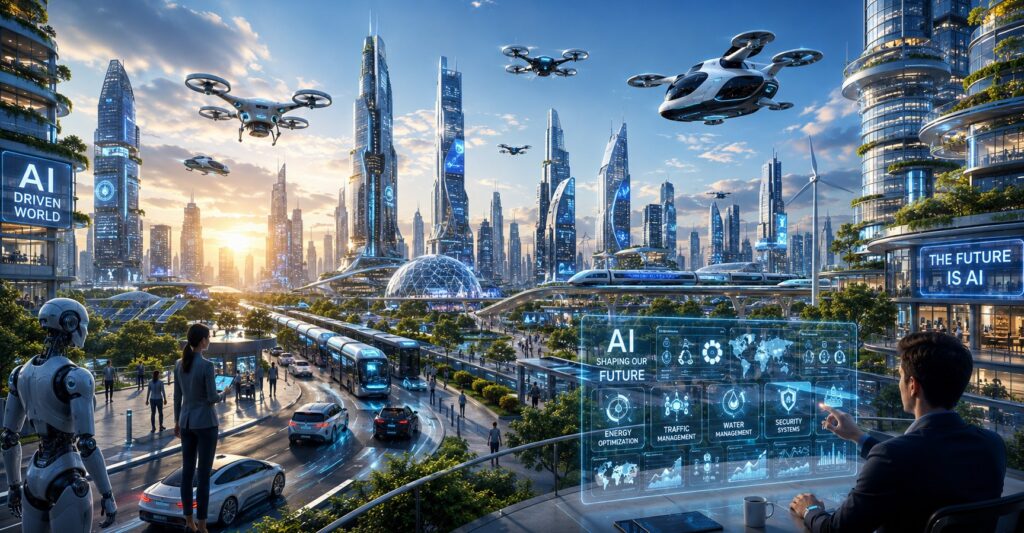
Future smart cities are expected to use AI systems for traffic optimization, public transportation management, energy efficiency, and public safety monitoring. AI-driven systems can analyze traffic patterns in real time to reduce congestion and improve transportation efficiency.
AI and Healthcare Innovation
Healthcare organizations are exploring AI systems that assist doctors with diagnostics, patient monitoring, appointment scheduling, and medical research. AI-powered systems may improve efficiency while helping healthcare professionals make more informed decisions.
Advanced Robotics
AI robots are becoming more sophisticated in manufacturing, logistics, hospitality, and healthcare environments. Future AI robots and human interaction technologies may allow robots to assist people more naturally in homes, offices, and public environments.
How Future AI Will Change Daily Life
Many Americans are already using AI technologies without realizing it. Streaming recommendations, navigation apps, digital assistants, and smart home systems all rely on artificial intelligence.
In the future, AI could influence daily life in several major ways:
Smarter Personal Assistants
Future AI assistants may understand natural conversations more accurately and manage complex daily tasks such as scheduling meetings, organizing travel plans, managing smart devices, and assisting with online shopping.
Personalized Education
AI systems may help students learn at their own pace through personalized educational platforms that adapt to individual learning styles and performance levels.
Smarter Shopping Experiences
Retail companies are using AI to personalize product recommendations, improve inventory management, and create faster online shopping experiences.
Improved Transportation
Future AI transportation technology ideas include autonomous vehicles, smart traffic systems, AI-powered navigation platforms, and connected public transportation networks.
AI Powered Future Smart Homes
Smart homes are expected to become even more advanced over the next decade. AI-powered future smart homes may include intelligent climate control systems, automated security monitoring, predictive maintenance alerts, and energy optimization features.
Examples of future smart home technologies include:
- AI-powered voice assistants
- Automated lighting systems
- Intelligent energy management
- Smart kitchen appliances
- AI home security monitoring
- Automated grocery management
These systems may improve convenience while helping homeowners reduce energy costs and improve home efficiency.
Future AI Cities and Smart Infrastructure
Smart cities are one of the most exciting areas of future artificial intelligence ideas for cities. Urban environments are becoming increasingly connected through sensors, cameras, transportation systems, and digital infrastructure.
Future AI systems may help cities:
- Reduce traffic congestion
- Improve emergency response systems
- Optimize energy consumption
- Monitor infrastructure maintenance
- Enhance public transportation efficiency
- Improve public safety monitoring
| Technology | Main Benefit | Potential Risk |
|---|---|---|
| AI Traffic Systems | Reduced congestion | Privacy concerns |
| Smart Energy Grids | Lower energy waste | Cybersecurity risks |
| AI Public Safety Monitoring | Faster emergency response | Data security issues |
| Connected Transportation | Improved mobility | Technical system failures |
Future AI Transportation Technology Ideas
Transportation is expected to change dramatically as AI systems become more advanced. Many companies are investing in autonomous vehicle technology, smart logistics systems, and AI-powered transportation networks.
Autonomous Vehicles
Self-driving vehicles are one of the most talked-about Future AI innovations. Although fully autonomous transportation still faces regulatory and safety challenges, AI-assisted driving systems are already becoming more common.
Smart Traffic Management
AI systems can analyze traffic conditions in real time and adjust traffic signals dynamically to improve transportation efficiency.
Electric and Connected Vehicles
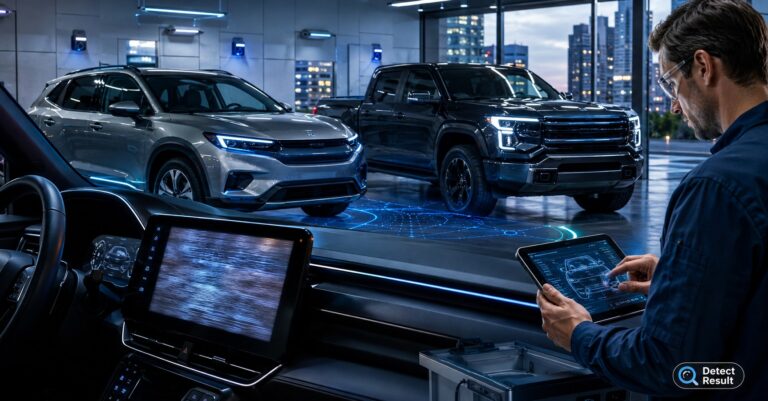
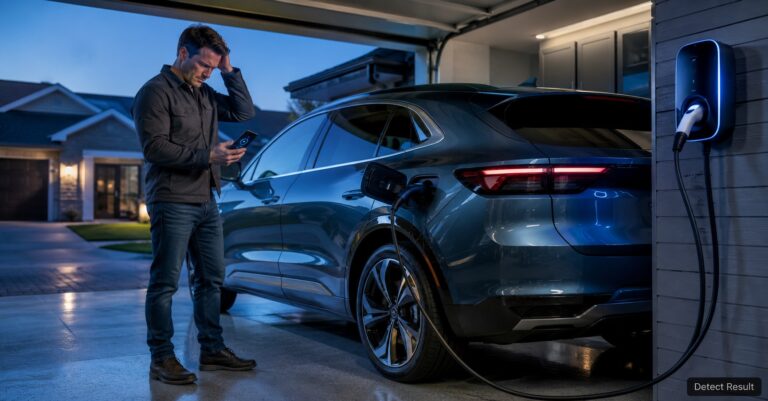
Future transportation networks may combine electric vehicles, AI-powered navigation, and connected infrastructure to create safer and more efficient mobility systems.
AI Robots and Human Interaction
Robotics technology is advancing quickly in industries such as manufacturing, logistics, hospitality, and healthcare. Future AI robots and human interaction technologies are expected to become more natural and more collaborative.
Instead of replacing all human jobs, many experts believe AI robots will assist workers by handling repetitive or physically demanding tasks.
Examples include:
- Warehouse automation robots
- Hospital delivery robots
- AI-powered customer service assistants
- Restaurant automation systems
- Smart retail inventory robots
Future AI Jobs and Automation Trends
One of the biggest concerns surrounding Future AI is its impact on employment. Automation may reduce demand for certain repetitive jobs, but it is also expected to create new technology-focused career opportunities.
Future AI-related careers may include:
- AI systems management
- Cybersecurity analysis
- Machine learning engineering
- AI ethics consulting
- Automation operations management
- Digital infrastructure maintenance
| Industry | AI Impact | Future Opportunity |
|---|---|---|
| Healthcare | Automated diagnostics | AI healthcare systems |
| Transportation | Autonomous driving | Smart mobility services |
| Retail | AI personalization | Digital commerce management |
| Education | Adaptive learning tools | Educational technology |
| Business Operations | Workflow automation | AI strategy consulting |
Future AI Automation for Businesses
Businesses across the United States are adopting AI automation systems to improve operational efficiency and customer experience.
Future AI automation for businesses may include:
- Automated customer support systems
- Predictive sales analysis
- AI-powered marketing tools
- Inventory forecasting systems
- Workflow automation platforms
- Smart analytics dashboards
Small businesses and startups are especially interested in AI tools because automation can help them compete more effectively with larger companies.
AI in Education and Remote Work
AI tools are becoming increasingly important in education and remote work environments. Educational platforms may use AI to personalize lessons, monitor student progress, and improve learning efficiency.
Remote work environments are also using AI tools for:
- Meeting transcription
- Task management
- Project organization
- Workflow automation
- Virtual collaboration
Future AI tools for education and work may improve productivity while helping organizations manage distributed teams more effectively.
Cybersecurity and Privacy Challenges
As AI systems become more connected to daily life and business operations, cybersecurity and privacy concerns are becoming increasingly important.
Potential challenges include:
- Data privacy risks
- Cybersecurity vulnerabilities
- AI-generated misinformation
- Bias in automated decision systems
- Unauthorized data collection
Businesses and governments will need strong cybersecurity systems and clear regulations to manage these risks responsibly.
Benefits and Drawbacks of Future AI
Major Benefits
- Improved productivity
- Reduced repetitive work
- Smarter business operations
- Enhanced transportation efficiency
- Better personalization
- Improved healthcare systems
Potential Drawbacks
- Job transition challenges
- Privacy concerns
- Cybersecurity risks
- Dependence on automation
- Ethical concerns
Best Future AI Innovations to Watch
Several emerging AI innovations could significantly influence the future digital economy.
AI-Powered Smart Glasses
Wearable technology may integrate AI assistants directly into smart glasses for navigation, communication, and productivity support.
AI Healthcare Monitoring
Advanced health monitoring devices may use AI to track health metrics and identify potential health concerns earlier.
Smart Urban Transportation
Connected AI transportation networks could improve traffic efficiency and reduce transportation costs in major cities.
Advanced Robotics
Future robotics systems may become more capable of assisting humans in homes, offices, healthcare facilities, and industrial environments.
Future Predictions for Artificial Intelligence
Over the next decade, Future AI technologies are expected to become deeply integrated into both personal and professional environments.
Possible future developments include:
- More advanced smart cities
- Wider adoption of AI transportation systems
- AI-powered healthcare diagnostics
- Greater automation in business operations
- Expansion of AI education platforms
- Improved remote work productivity systems
However, successful AI adoption will depend on responsible technology development, cybersecurity protections, and ethical implementation strategies.
Practical Expert Insight
Future AI offers tremendous opportunities for businesses, startups, and consumers, but realistic expectations are important. Artificial intelligence is most effective when used as a tool that supports human productivity rather than replacing human creativity, judgment, and leadership completely.
Businesses should focus on adopting AI systems gradually while prioritizing cybersecurity, employee training, and practical real-world use cases. Consumers should also stay informed about privacy settings, digital security, and how AI systems collect and use data.
The companies and individuals who adapt to AI responsibly and strategically will likely have the strongest long-term advantages in the evolving digital economy.
FAQ Section
What is Future AI?
Future AI refers to advanced artificial intelligence systems that are expected to improve automation, business operations, transportation, smart cities, education, and digital productivity over the coming years. These technologies are designed to become smarter, faster, and more connected to daily life.
How will Future AI change daily life?
Future AI may improve daily life through smarter home systems, automated transportation, personalized education tools, advanced healthcare systems, and AI-powered digital assistants that help people manage tasks more efficiently.
Will AI replace human jobs completely?
AI may automate some repetitive tasks, but many experts believe new career opportunities will also emerge in technology management, cybersecurity, AI operations, digital infrastructure, and automation support industries.
What are smart cities?
Smart cities use connected technologies and AI systems to improve transportation, energy efficiency, public safety, and urban infrastructure management through real-time data analysis and automation.
Are AI-powered smart homes safe?
Smart homes can improve convenience and efficiency, but users should prioritize cybersecurity, strong passwords, software updates, and privacy settings to reduce potential risks.
How can businesses use Future AI?
Businesses may use AI for workflow automation, customer support, marketing optimization, inventory management, analytics, and productivity improvements.
What industries will benefit most from AI?
Healthcare, transportation, education, logistics, retail, cybersecurity, and business services are expected to benefit significantly from AI innovation.
What are the biggest risks of Future AI?
Potential risks include cybersecurity threats, data privacy concerns, automation-related job changes, misinformation, and ethical concerns surrounding automated decision-making systems.
Final Practical Checklist
- Learn the basics of AI technology and automation
- Explore practical AI tools for productivity
- Prioritize cybersecurity and privacy protection
- Stay informed about AI technology trends
- Adapt business workflows gradually
- Monitor future smart city developments
- Build digital skills for future workplaces
- Evaluate AI tools based on practical value
Conclusion
Future AI is expected to become one of the most influential technologies shaping the global economy, modern businesses, transportation systems, education platforms, and daily life experiences over the coming decade. From AI-powered smart homes and intelligent transportation systems to advanced robotics and business automation, artificial intelligence is already changing how people live and work.
While Future AI presents exciting opportunities for innovation and productivity, it also requires careful planning, responsible implementation, and strong cybersecurity protections. Businesses, students, entrepreneurs, and technology enthusiasts who stay informed and adapt strategically will be better prepared for the rapidly evolving digital future.
The future of artificial intelligence is not simply about machines becoming smarter. It is about how humans and intelligent technologies can work together to create more efficient, connected, and innovative environments for businesses and society.